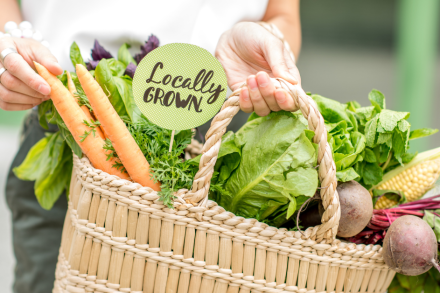
Did you know that eating local, seasonal food not only benefits the environment and your local economy but also boosts your nutritional health? It’s true! Seasonal produce is way tastier (and better for the world) when eaten closer to its harvest date.
For a printer-friendly version of this article, click here.
During a time when the average distance traveled by food is about 1,500 miles, the daily habits of the average shopper end up having significant environmental implications. Choosing to support local farms and eating a seasonal diet helps to promote a healthier and more eco-conscious lifestyle that may also challenge your culinary comfort zone.
To enjoy the full nourishment of food, do your best to eat seasonally. Where you live will determine the types of fresh, local produce you can access. Whenever possible choose fresh, local produce over canned or imported. There are more nutrients and fewer preservatives in fresh fruits and vegetables. Frozen produce is an excellent second choice to fresh.
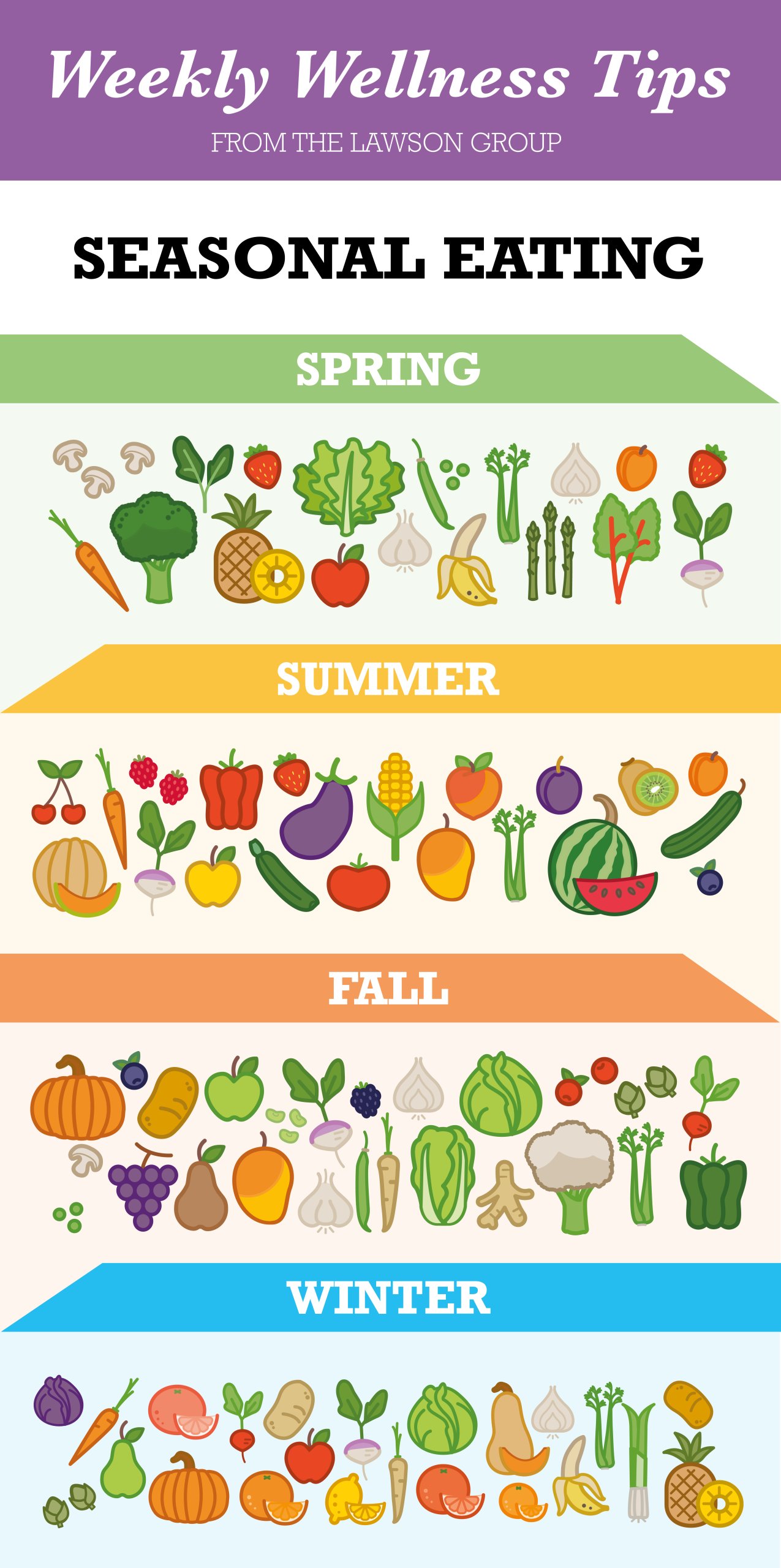
General suggestions for seasonal produce in New England to follow:
Spring (April to May)
Safe bets for spring are tender, leafy vegetables with green hues like:
- Kale
- Spinach
- Asparagus
- Artichokes
- Fiddleheads
- Rhubarb
Summer (June to July)
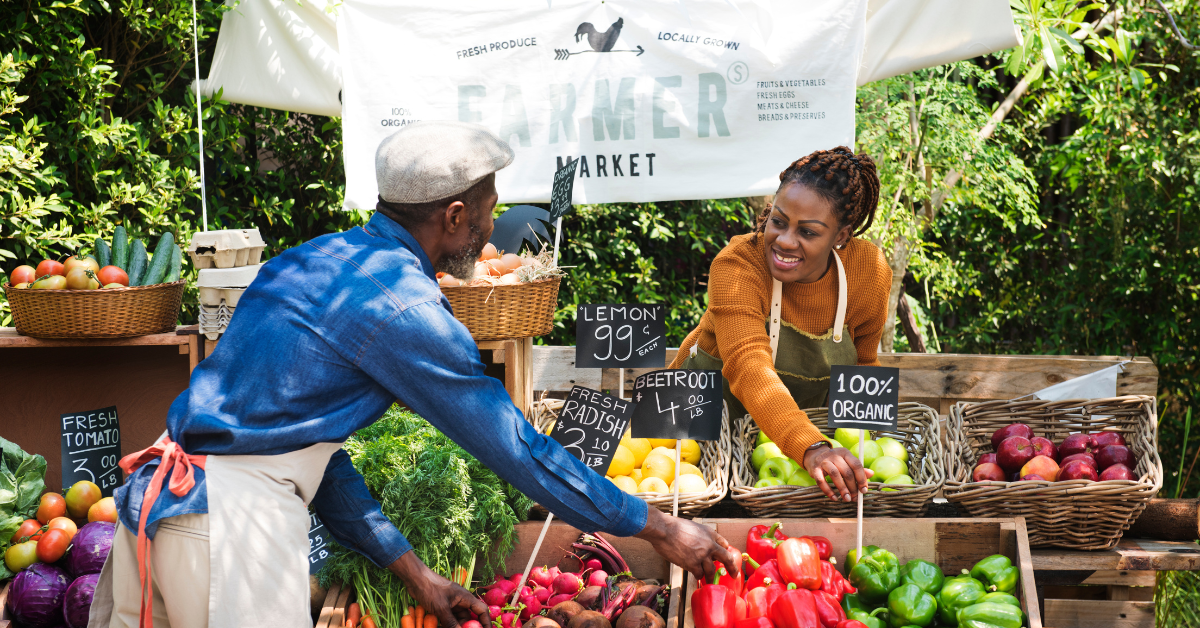
You can trust your instincts here, go for light, cool fruits and veggies with colorful hues. Check out your local farmer’s market if you’re looking for some cooking inspiration:
- Tomatoes
- Blackberries
- Blueberries
- Broccoli
- Carrots
- Corn
- Cucumbers
- Eggplant
- Green Beans
- Lettuce
- Summer Squash
- Strawberries
- Raspberries
- Watermelons
Late Summer (August)
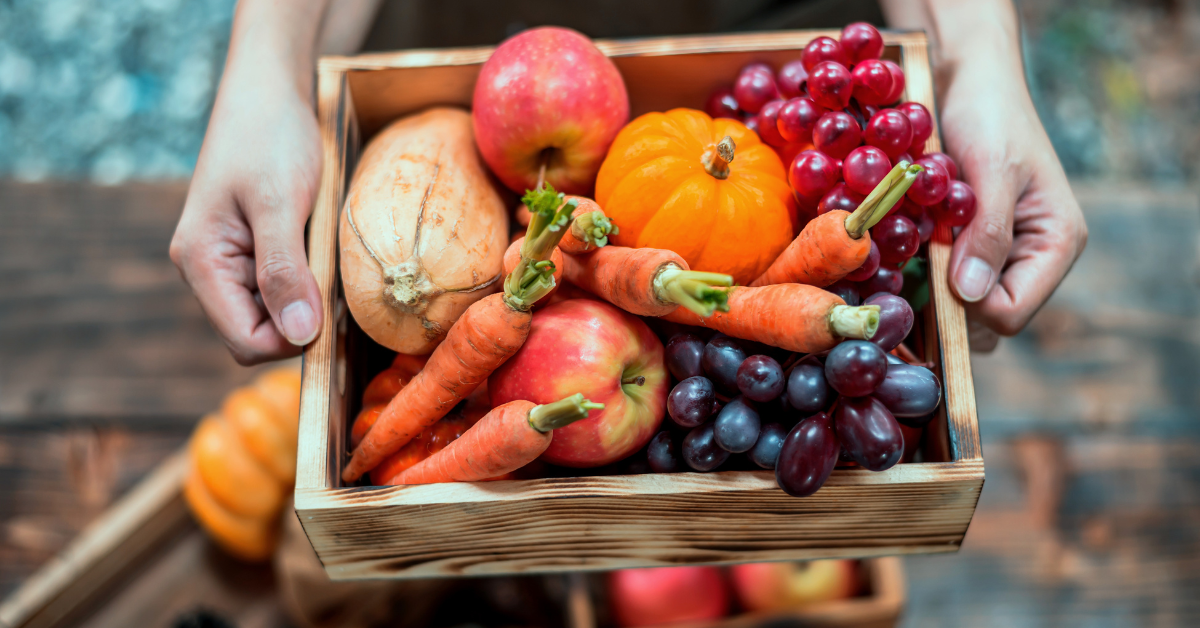
We’re heading into gourd season now! Go for hearty, healthy-looking gourds as well as fruits with cores and darker, richer berries:
- Apples
- Arugula
- Broccoli
- Onions
- Pears
- Peppers
- Potatoes
- Pumpkins
- Squash
- Sweet Potato
Fall (September to October)
Go for warmer fruits and root vegetables with yellow, red, and brown hues—especially ones that work with soup:
- Beets
- Brussels Sprouts
- Cauliflower
- Cranberries
- Garlic
- Leeks
- Turnips
Winter (November to March)
Snowcover, particularly in New England, makes it a little tricky to find local fruits and vegetables. Opt for produce that is lightly colored, although depending on the weather many Fall foods may still be available:
- Collard Greens
- Mushrooms
- Parsnips
- Rutabagas
- Swiss Chard
- Winter Squash
- Yams